
What Is Happening With Northern Virginia Industrial Space?
If you have tried to lease or buy industrial space in Northern Virginia lately, you already know the feeling. There is almost nothing available. What is available costs far more than it did a few years ago. And the moment something good hits the market, it is gone before you finish scheduling the tour.
Tenants think they are doing something wrong. Buyers think they are missing a trick. They are not.
The market has genuinely changed, and it changed for reasons that are structural, not temporary. Understanding why is the first step to actually navigating it. So let us walk through what is happening, why it is happening, and what industrial tenants and buyers can realistically do about it.
⸻
First, the reality on the ground
The numbers tell a stark story, and they have been moving in one direction for a while.
As this is written, industrial vacancy across Northern Virginia sits in the high-3 percent range and has been trending down since late 2023. Average asking rents have pushed toward the high-teens per square foot and keep climbing. New deliveries have slowed to a trickle, with the construction pipeline a fraction of what a market this size would normally carry. Net absorption has fallen hard, not because demand dried up, but because there is simply nothing left to absorb.
On the sale side it is even more dramatic. Industrial has become one of the most sought-after asset classes in the entire region, accounting for a large share of all commercial real estate dollars traded here. Sale prices per square foot that would have seemed impossible a few years ago are now the going rate, and they vary widely across Loudoun County, Fairfax County, and Prince William County depending on location, power, and use.
Low vacancy, rising rents, almost nothing for sale, and sale prices at record highs. That is the whole picture in one sentence, and every part of it points back to the same handful of causes.
⸻
Culprit number one: data centers are eating the land, and now the power
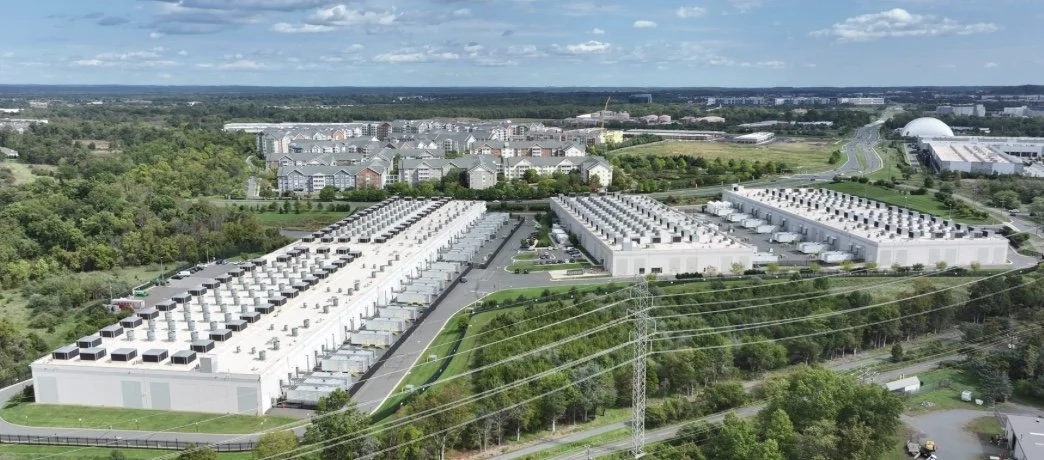
You cannot understand the Northern Virginia industrial market without understanding data centers.
This region is the data center capital of the world. Loudoun County alone carries a staggering concentration of it, and the build-out has spread across Prince William and beyond. That boom does not sit in its own lane. It competes directly for the exact same ingredients industrial development needs, which are developable land, the right zoning, highway access, and power.
Here is the part that matters most, and it is the piece most people miss. Land was always the obvious constraint. But increasingly the real constraint is power. A data center will pay for land, and pay for power, at levels a warehouse or flex building simply cannot justify. When a developer holds a parcel that could become either a distribution building or a data center, the economics of that decision are not close. The data center wins almost every time.
So the region is not just short on industrial land. It is short on the electrical capacity to build much of anything new, and the capacity that does exist is being routed toward the use that pays the most for it. That is why the construction pipeline is so thin. It is not that nobody wants to build industrial. It is that the land and the power keep getting bid away by a use with deeper pockets.
⸻
Culprit number two: last-mile logistics is not going anywhere
At the same time supply is being strangled, demand has structurally increased.
Northern Virginia sits next to one of the wealthiest, densest consumer markets in the country. The way people and businesses buy things now, quickly, locally, delivered, requires physical space close to the customer. That is last-mile logistics, and it depends entirely on infill industrial real estate, the kind of well-located warehouse and distribution space that lets goods reach the end customer fast.
You cannot serve the Washington region's population from three states away. You have to be here. Which means every logistics operator, every distributor, every business that needs to move product to local customers is competing for the same shrinking pool of well-located industrial space.
This is not a pandemic blip that will fade. It is a permanent change in how commerce works, and it has permanently raised the floor on demand for infill industrial in markets exactly like this one. Rising, durable demand meeting falling, constrained supply. There is only one direction rents and prices go from there.
⸻
Culprit number three: they are not making more of it
Northern Virginia is not a wide-open market with endless dirt to develop.
Land is limited, entitlement is slow and difficult, and the parcels that could support industrial are exactly the parcels being competed for by higher-paying uses. Older industrial buildings that might have been redevelopment candidates are increasingly worth more standing than they would be as something new, or they get repositioned for a use that pays more.
The result is a market that cannot build its way out of the shortage. In most markets, high rents eventually trigger a wave of new construction that brings things back into balance. Here, the normal release valve is largely jammed shut, because the new supply that high rents would normally unlock is being outbid for land and power before it ever breaks ground.
⸻
Culprit number four: some of the land got rezoned away
There is one more piece to the supply story, and it is easy to miss because it happened quietly and with good intentions.
Northern Virginia has a very real housing shortage, and part of the response to it was to rezone land, including industrial and industrially zoned parcels, for residential use. On its own terms that was a reasonable policy choice. People need places to live, and housing is a legitimate priority.
But a lot of that rezoning happened before the full upside of industrial land became obvious, before the data center boom and the last-mile surge turned well-located industrial dirt into one of the most valuable things in the region. In hindsight, some of that land was converted at exactly the wrong moment.
And here is the problem with rezoning industrial land to residential: it is a one-way door. Once a parcel becomes a townhome community, it is gone as industrial land for good. Nobody converts housing back into a warehouse. So the region permanently gave up a slice of an already scarce industrial land base, right as demand was about to go vertical. It is nobody's villain. It is just one more reason the supply cannot easily grow back.
⸻
The renewal shock: coming off a 3 percent world into a 40 percent market
Here is where the market stops being abstract and starts being personal, and it is where a lot of the anger is landing right now.
Picture a tenant who signed a five-year lease with 3 percent annual escalations. On signing day that felt safe. Predictable. Responsible, even. And for five years it was.
But over those same five years, market rents for Northern Virginia industrial did not climb a tidy 3 percent a year. They ran away. So when that lease comes up for renewal, the tenant is not looking at a modest step-up. They are looking at a 40 to 50 percent increase, sometimes more, all at once, just to stay in the same building they have occupied for years.
It feels like a betrayal, and the reaction is understandable. The tenant did nothing wrong. And in most cases the landlord did nothing wrong either. The 3 percent escalations that once felt generous simply could not keep pace with a market that reset far faster than almost anyone predicted. That renewal number is not a landlord being greedy. It is the gap between a contract written in one market and a renewal happening in a completely different one.
Understanding that does not make the number smaller, but it does change how you handle it. If you are a tenant, this is the single clearest argument for lead time, preparation, and getting your renewal strategy in motion long before the clock runs out. And it is exactly why the escalation structure and the renewal options you negotiate on day one of any new lease matter so much. The tenant who fought for a renewal cap or a longer term at signing is sitting in a very different seat today than the one who accepted a standard 3 percent and a five-year term without a second thought.
⸻
What this means if you are a tenant
For industrial tenants, the old playbook is dangerous, and the biggest mistake is waiting.
The tenant who assumes they will "start looking a few months before the lease is up" is walking into a market where there may be nothing to look at. We regularly see tenants shocked to discover that when their lease expires, there is no comparable space available at any price, and their existing landlord knows it.
That changes how you have to operate:
Start absurdly early. Twelve to eighteen months before expiration is not too soon. In this market, lead time is leverage, and running out of time is the single most expensive thing a tenant can do.
Take your renewal seriously as a real negotiation. Your current landlord understands the market as well as you do. But that does not mean you have no leverage. It means your leverage has to be built deliberately and early, before you are cornered by the calendar.
Be flexible on the things you can flex, and rigid only on what you truly need. Configuration, clear height, exact submarket, and timing are all levers. The tenant who can move on some of them will find options the rigid tenant never sees.
Get in front of space before it is listed. In a market this tight, the best space often never makes it to a public listing at all. It moves quietly, through relationships. If you are only looking at what is advertised, you are looking at what everyone else has already passed on.
⸻
What this means if you are a buyer
For buyers, the challenge is different but related. There is very little for sale, and what trades, trades fast and rich.
Digital infrastructure buyers are increasingly purchasing assets outright rather than leasing, and they show up with resources most private buyers cannot match. Competing head-on for the same trophy assets is usually a losing game.
The realistic paths are quieter. There is genuine value in older, functionally dated buildings that can be repositioned, in off-market deals sourced through relationships rather than listings, and in moving decisively with clean terms when the right opportunity appears, because the seller in this market has options and rewards certainty. Patience and preparation win here far more often than the highest bid does.
⸻
What this looks like done right
At Axios Property Group, this is the market we live in every day, and we work it the way it actually rewards.
We start from the reality that the best industrial space in Northern Virginia rarely announces itself. So we do not wait for listings. Our ground game is old school on purpose. We knock on doors. We make the calls. We keep lists, real ones, of who owns what, who is growing, who is quietly thinking about selling, and who has space coming available before anyone else knows. When a tenant or a buyer comes to us in a market with almost no visible inventory, we are not starting from a public search everyone else already ran. We are starting from relationships and knowledge built one conversation at a time over years.
And here is the part that genuinely sets us apart. Axios does not only represent tenants and buyers and manage property for other people. We own and lease our own commercial space, with our own capital on the line. In a market like this one, that perspective is worth a great deal. We know how owners are thinking, because we are owners. We know which asking prices have real cushion and which are firm, which sellers want speed over the last dollar, and where a repositioning play actually pencils versus where it just looks good on a spreadsheet.
That combination, an active ground game plus a true owner-operator perspective, is exactly what a tight, opaque, relationship-driven market demands. You cannot navigate a market with no visible inventory by searching harder. You navigate it by knowing people, knowing the assets, and knowing how the other side thinks.
⸻
The bottom line
Northern Virginia industrial is not expensive and tight by accident, and it is not a temporary spike that patience will outlast.
It is the predictable result of durable forces colliding. Data centers are bidding away the land and the power that new industrial would need. Last-mile logistics has permanently raised demand for well-located space. And a land-constrained region simply cannot build its way back into balance. Those forces are not reversing anytime soon.
For tenants and buyers, that reality is tough to swallow, but it is far better to face it clearly than to walk in with an outdated playbook and get caught flat-footed. The people who do well in this market are not the ones who find a secret cheap deal. They are the ones who start early, prepare thoroughly, stay flexible, and work with someone who is genuinely in the market every week rather than waiting on a listing.
That is the part somebody should probably be paying attention to before your lease is up or your acquisition window closes.
⸻
Before you make a move
If you have an industrial lease coming up, or you are trying to buy industrial space in Northern Virginia and coming up empty, have a conversation early, well before you are up against a deadline.
We are happy to tell you honestly what the market looks like for your specific need, what is realistically available or coming available, and how we would go about finding you space or an asset that never hits a public listing. Across Fairfax County, Loudoun County, Prince William County, Tysons Corner, Leesburg, and the greater Northern Virginia region, the tightest markets are exactly where relationships and real market knowledge matter most.
No pressure, no obligation, and no charge to talk it through. In a market this difficult, a straight conversation early is worth more than a frantic search late.
Reach out to Jason Drakopoulos or visit Axios Property Group before you make your move.
⸻
Axios Property Group provides commercial real estate services including industrial leasing, property management, landlord representation, tenant representation, retail leasing, brokerage, and advisory work for retail, office, industrial, and mixed-use properties throughout Fairfax County, Loudoun County, Prince William County, Tysons Corner, Leesburg, Fairfax, and the greater Northern Virginia region.
For more information about industrial leasing, acquisitions, or any of our commercial real estate services, visit Axios Property Group.
⸻
About the Author
Jason Drakopoulos is President of Axios Property Group, a Northern Virginia commercial real estate firm specializing in commercial property management, landlord representation, leasing, brokerage, and asset management throughout Fairfax County, Loudoun County, Prince William County, Tysons Corner, Leesburg, Fairfax, and the greater Northern Virginia region.
